
Key Takeaways
- Nobody can tell you how many keys to your new house exist. Not the seller, not the agent, not the title company. That single unknown is the entire reason a home rekey is standard practice after closing.
- A new home rekey is not a replacement. A home rekey keeps your existing hardware and changes what it answers to from the inside, which costs a fraction of new locks and takes minutes per door.
- The front door is the smallest part of the job. Back doors, garage entries, sheds, and gates all deserve attention, and matching them to one key is usually free while a technician is already on site.
- Keys are not your only problem. Garage codes, keypad locks, and smart lock factory settings survive a rekey untouched, and the previous owner remembers every one of them.
- Do it before you sleep there. Later in this guide we cover what a home rekey costs around El Dorado and the one lock category that people almost always miss until something goes wrong.
Here is the short answer. Yes, you should rekey after buying a house, and a new home rekey should happen before your first night in it. A home rekey keeps every lock you already own and changes the internals so old keys stop working, which is why it costs far less than replacing hardware. Around El Dorado you can expect roughly $20 to $35 per lock plus a service call, and the whole home rekey usually finishes in under an hour. Mobile Locksmith Services handles it at your new address at (870) 639-6682.
The rest of this guide explains why the answer is yes, what a home rekey physically does, every lock worth including, and the things a rekey does not touch at all. If you want the full picture of what we cover across Union County, our El Dorado locksmith page has it. This page is about one narrow question: you have the keys, now what?
Nobody Knows How Many Keys Are Out There
Ask the seller how many keys exist and you will get an honest answer that is also wrong. They will hand you two or three keys and mean it, which is exactly why a home rekey is not about distrusting anyone. What they cannot account for is fifteen or thirty years of ordinary life happening in that house, because almost none of it was written down and most of it they have genuinely forgotten.
| Who Had a Key | Why |
|---|---|
| Previous owners | Their own spares, plus copies |
| Their grown children | Moved out, kept the key |
| Neighbors and family | Emergency spare, never returned |
| Contractors and cleaners | Given access, rarely tracked |
| Pet sitters, dog walkers | Routine access for years |
| Prior owners before them | Nobody rekeyed last time either |
That last row is the one that should decide it for you. If the people you bought from never did a home rekey when they moved in, then every key from the owners before them still works on your house today. Two owners without a rekey means you inherited two full generations of forgotten copies. Nobody involved is being dishonest. The information simply does not exist.
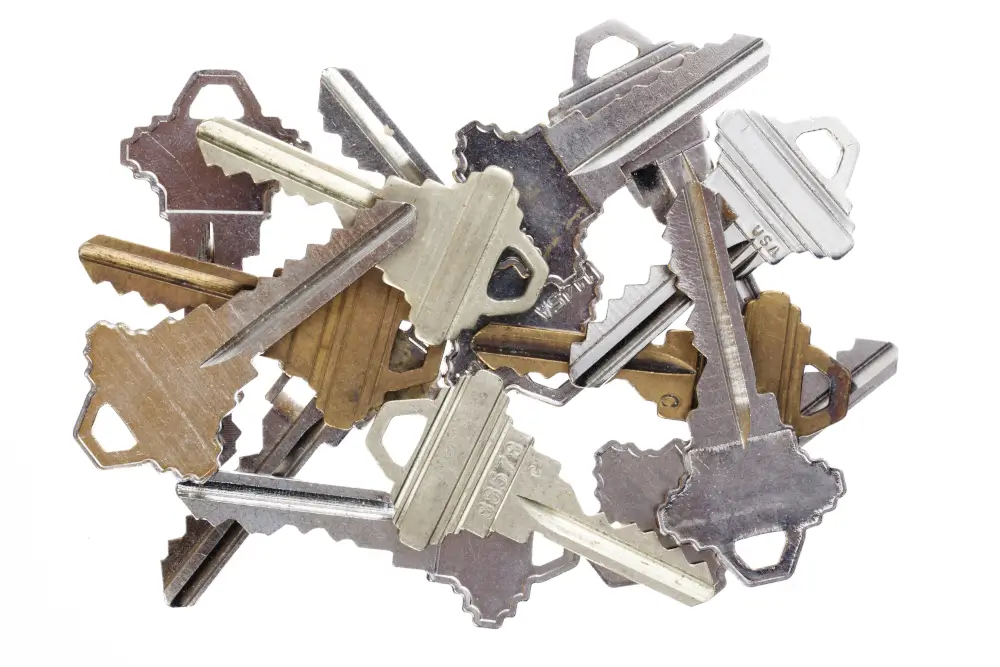
The photo above is a pile of freshly cut keys, and that is deliberate. The risk here is not romantic and it is not about old rusty keys in a drawer. It is about the ordinary, cheap, five minute act of copying a key, repeated over decades by people who had every right to do it at the time. Federal closing guidance is thorough about titles, disclosures, and funds, and you can read the whole official closing walkthrough without finding a single line about your locks. That gap is not an oversight in the paperwork. It is simply not the paperwork’s job.
Rekey or Replace: The Short Version
People conflate these two constantly, so here is the distinction in one breath. Replacing means new hardware on the door. A home rekey means your existing hardware stays and the inside changes so that old keys no longer work. For a house you just bought, a home rekey is almost always the right call, because the goal is invalidating unknown keys rather than upgrading anything.
There are situations where replacing genuinely wins, and that decision has enough moving parts that we gave it its own guide. Our comparison of rekeying against replacing covers the cost and security tradeoffs properly. For most El Dorado buyers standing in a house they just closed on, though, the home rekey is both the cheaper answer and the correct one.
What a Home Rekey Actually Changes
Worth understanding, because it explains the price. Inside every lock cylinder sits a row of small spring loaded pins. Each pin is cut into two pieces at a specific height, and your key lifts every one of them to exactly the point where the split lines up with the edge of the plug. When all of them line up at once, the plug turns. Wrong key, wrong heights, nothing moves.
A home rekey swaps those pins for a different set of heights and cuts you a new key to match. The lock body, the finish, the deadbolt, the strike plate, all of it stays on your door exactly as it was. Only the pin stack changes, which is why a home rekey takes minutes per lock instead of an afternoon and why the parts cost a few dollars rather than a few hundred.
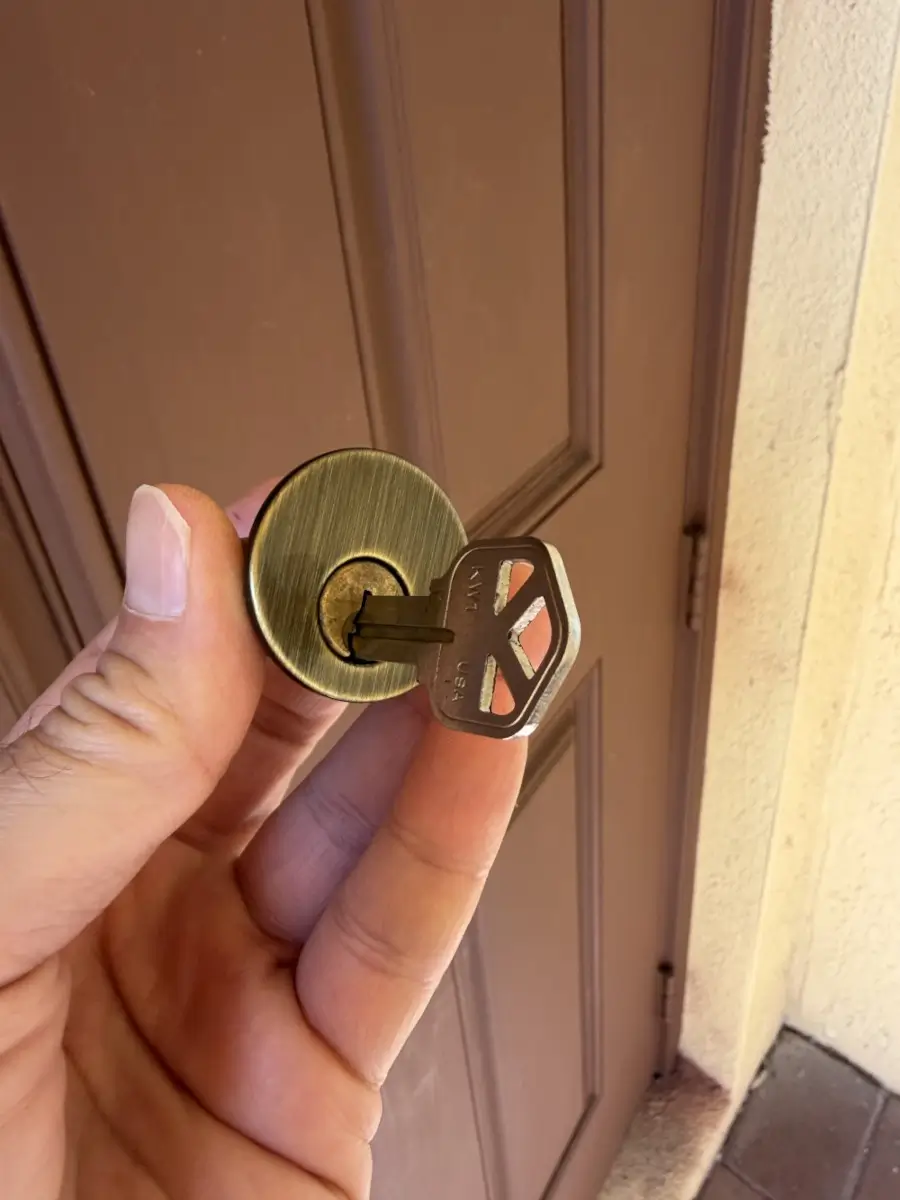
That brass cylinder came off one of our own service calls, not a stock library, and it is a good example of why the age of a house rarely complicates this. It is a decades old cylinder taking a standard Kwikset key, and it takes a home rekey exactly the same way a lock bought last week does. Old hardware is not an obstacle to a home rekey. It is usually the reason one is overdue.
The practical upshot is that you are paying for skill and minutes, not materials. A technician who does this daily moves through a house quickly, and our residential locksmith service handles the whole set in one visit rather than one door at a time.
What the Visit Actually Looks Like
Removing the mystery helps people schedule it, so here is the whole procedure. A technician arrives at your address with a pinning kit and a key machine already in the vehicle. Each lock comes off the door, the cylinder comes apart, the old pins come out, fresh pins go in at heights matching a new key, and the lock goes back on. Then it gets tested twice, once with your new key and once with the old one, because proving the old key fails is the entire point.
Repeat per door. A four door house is a short appointment. Nothing gets drilled, nothing gets damaged, and your doors look identical afterward, which occasionally disappoints people expecting drama. The absence of drama is what you are paying for. A new home rekey is a quiet procedure that leaves no evidence except a key in your hand that nobody else on earth carries.
Every Lock Worth Including, Not Just the Front Door
Here is where most people underspend and then regret it. The front door gets all the attention because it is the door you think about, but a house has more openings than that, and a burglar has never once been confused about which door is the formal one. Every lock that a key opens deserves a place in the home rekey conversation.
| Lock | Why It Matters |
|---|---|
| Front deadbolt and knob | Two cylinders, not one |
| Back and side doors | Least watched entry points |
| Garage entry door | Opens into the house |
| Shed and outbuildings | Tools that open other things |
| Gates and fence latches | Access to the whole back |
| Mailbox | Documents and identity |
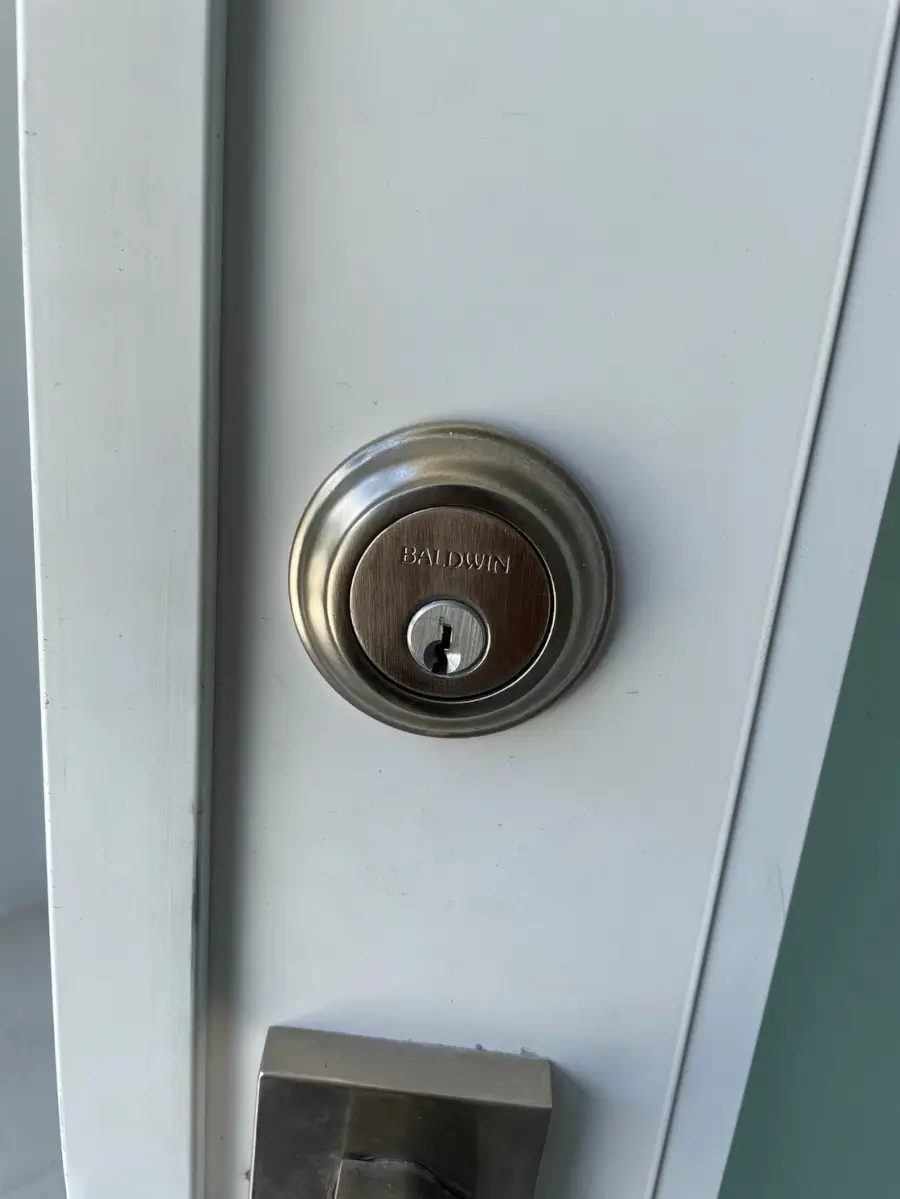
The deadbolt in that photo is a good illustration of the first row. Most front doors carry two separate cylinders, the deadbolt and the knob or handleset, and they are frequently not keyed alike. New owners routinely pay for a home rekey on the deadbolt, walk away happy, and never realize the knob below it still turns for whoever has the old key.
Ask for everything on one key while you are at it. Keying an entire house alike is normally included in home rekey labor rather than billed extra, and it turns a ring of six mystery keys into one key that opens your house. That convenience is not cosmetic. People who cannot find the right key start propping doors and hiding spares outside, which undoes everything the home rekey bought.
Just closed on a house in El Dorado?
One visit, every lock, one key. We come to your new address, quote the full job before we start, and finish while the moving truck is still unloading.
Call us now: (870) 639-6682
The Ones Everybody Forgets
Now the section that catches almost everyone. A home rekey solves keys. It does absolutely nothing about every other way your house opens, and modern houses open in several ways that have no key at all. You can rekey every cylinder on the property and still leave the previous owner with working access.
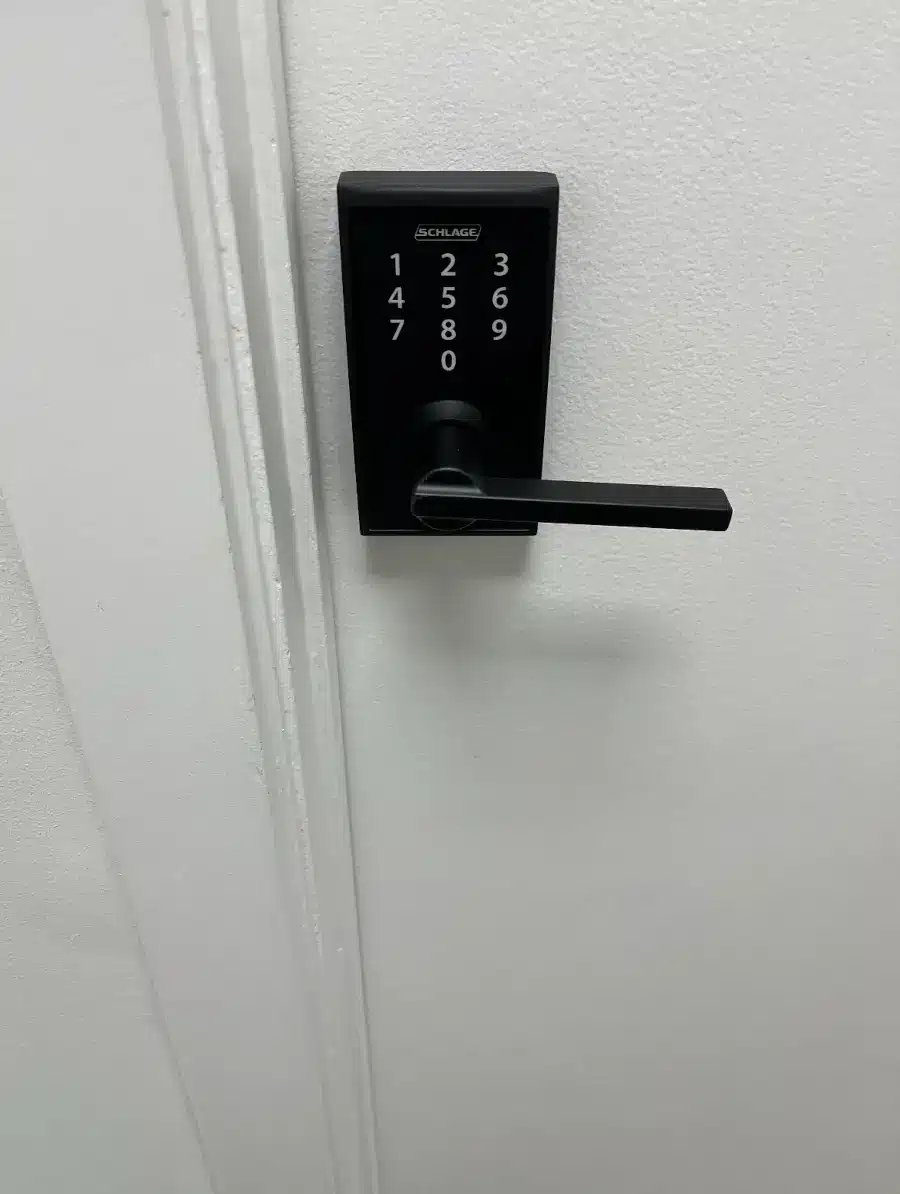
That keypad is the perfect example. Rekey the cylinder beside it all you like. The code the previous owner typed every day for six years still opens that door tonight, and it will keep opening it until somebody deliberately changes it. The lock is not broken and the home rekey was not wasted. They are simply two different systems, and only one of them involves keys.
| What to Change | Who Still Has It |
|---|---|
| Garage keypad code | Owner, kids, neighbors |
| Garage remotes | Old car visors, sold cars |
| Keypad lock codes | Everyone who ever visited |
| Smart lock app access | Old accounts, still paired |
| Realtor lockbox | Every agent who showed it |
| Alarm codes | Owner and monitoring company |
The realtor lockbox row deserves a word, because no home rekey touches it. During the showing period, a box hung on your door containing a working key, and it opened for every agent with access to the system. Most get removed at closing. Check that yours actually did, and if a key lived in that box for three months, treat it as a key that has been in more hands than any other on the property.
Alarm systems deserve their own phone call. If the house came with monitoring, the previous owner’s passcode and verbal safe word may both still sit on file with the company, and the installer’s default master code often lives underneath all of it untouched. Call the monitoring company yourself, put the account in your name, and set every code from scratch. It takes one conversation, and it closes a door that has nothing to do with locks at all.
Smart locks add their own wrinkle, because they carry factory default codes alongside whatever the owner programmed, and plenty of people never change the default at all. If your new house has one and you are unsure how to take ownership of it properly, our smart lock guide covers setup and the builder-grade trap in detail.
Timing: Do It Before the First Night
Closing day is chaos and a home rekey is easy to postpone, so here is the honest framing. The risk from unknown keys is small on any given night. It is also completely unnecessary, cheap to remove, and it compounds every day you wait, because now the moving crew, the carpet installer, and the appliance delivery have all seen your doors too.
The rule of thumb is to rekey after closing, not eventually. Schedule the home rekey for closing day or the day after. Most buyers get keys in the afternoon and the house sits empty that night, which is the ideal home rekey window: nothing to work around, nobody underfoot, and a technician can be through the whole property in well under an hour. If you are moving in the same day, it still works, since the job needs the doors and not the rooms.
There is one exception worth naming. If you bought the house as a rental rather than a residence, your obligations run further than a single home rekey, because key control across tenant cycles is a different discipline with its own liability. Our landlord rekeying guide covers that side properly.
The Spare Nobody Mentioned
Plenty of houses have a key hidden outside them, and the person who hid it moved out last week. Under a rock, on the ledge above the door, inside a fake sprinkler head, in a magnetic box behind the propane tank. Sellers forget these completely, because the entire purpose of a hiding spot is that you stop thinking about it.
A home rekey handles this without anyone needing to find it, which is the quiet elegance of the approach. That hidden key stops working the moment the pins change, whether you ever locate it or not. Same with the copy in a grown child’s junk drawer three states away, and the one a contractor never returned in 2014. You are not hunting keys down. You are making every one of them irrelevant at once, which is the only strategy that works against a number nobody knows.
El Dorado Realities
This town has a specific reason to care about this, and it is not the one you would guess. El Dorado has spent close to two decades actively recruiting families. The El Dorado Promise was created by Murphy Oil to pay college tuition for graduates of the local high school, and it was designed explicitly to grow school enrollment. Programs like that move households, and households buy houses, which is why new home rekey calls cluster around school enrollment season here.
Which means a meaningful share of El Dorado buyers are not from El Dorado. They are arriving from out of state or across Arkansas, with no local contractor to ask and no history with the house whatsoever. Add Murphy Oil headquarters and the chemical corridor, and you get transfer buyers who close on Friday and start work Monday. Those are exactly the people for whom a home rekey is least optional and most likely to get postponed.
The housing stock adds the second wrinkle. El Dorado carries three historic districts, two of them residential, which means a genuine supply of homes that have been standing since the oil boom era. A house from the 1920s has had a lot of hands on it. That is not a problem for the home rekey itself, as the brass cylinder above shows, but it does mean the count of unaccounted keys is higher than in a subdivision built in 2019.
One more wrinkle particular to a town like this: a good share of the housing here has been held by the same family for a long stretch, and long tenure means more accumulated access. A house that changed hands three times in fifteen years has a shorter key history than a house one family kept for forty years before selling. The second one feels safer and is usually the opposite.
One local practicality: a mobile service reaches you at the new address, which matters more than it sounds when your day is already full of utility appointments and unloading. Nobody needs a trip to a storefront on closing day.
1
Key for the whole house
<1hr
Typical whole-home visit
0
Hardware replaced
What a Home Rekey Costs Around El Dorado
Pricing is refreshingly simple here because there is barely any material involved. Across this region a home rekey commonly runs about $20 to $35 per lock, plus a service call to get a technician to your address. A typical house with four to six cylinders lands somewhere near the low hundreds all in, and keying everything alike is normally part of the labor rather than a line item.
Three things move that figure: how many cylinders you actually have, whether any hardware is old enough to need servicing rather than a straightforward home rekey, and how far out of town the address sits. All three are knowable on the phone, so expect a firm quote before anyone is dispatched. If you want the fuller picture of how service call pricing works around Arkansas, our guide to what a locksmith visit costs lays it out.
One more figure worth knowing: the per lock price effectively drops the more doors you do at once, because the service call is the fixed cost and the cylinder work is the variable one. Doing three doors now and three next month means paying to get a technician out twice. Whatever you intend to change the locks on, do it in a single visit.
Be accurate with whoever quotes you, too. Six exterior doors plus a shed and a gate is a different job from a front and back door, and a home rekey cost quoted on bad information is a number that moves on arrival, which serves nobody. Count your doors before you dial. It takes two minutes and it makes the figure you hear the figure you pay.
Compare that against replacing hardware and the math stops being a debate. New exterior locks run well past a hundred dollars each for anything decent, and you would be buying them to solve a problem that a few dollars of pins already solves. Spend the difference on something the house actually needs.
Keeping Count This Time
Once you rekey after closing you own the only functioning keys to your house, and that position is worth protecting. The reason a new home rekey was necessary at all is that the previous owners lost track, and there is nothing unusual about them. It happens to every household that does not decide, early, to keep count.
Cut two spares and stop there. Write down who holds one. If you hand a key to a contractor for a week, get it back and note that you did. When a housekeeper moves on or a relationship ends, that is the moment to think about it rather than five years later. None of this is paranoid. It is bookkeeping, and it is the difference between eventually selling a house with a known key count and selling one where the next buyer has to pay for another home rekey.
When Rekeying Is Not Enough
Honesty requires one caveat. A home rekey invalidates old keys. It does not improve a lock that was weak to begin with, and it cannot help hardware that is already failing. If the deadbolt on your new back door is a builder-grade unit with an inch of throw and a strike plate held on by half inch screws, a home rekey on it just means the wrong people need a different bad key.
Walk the house once with fresh eyes before you change the locks on anything. Locks that feel loose in the door, deadbolts that need a shoulder to throw, strike plates screwed into trim instead of framing, exterior knobs that wiggle. Those are replacement conversations, not home rekey conversations, and a technician who is already on site can tell you which is which in about a minute per door. Our deadbolt upgrade guide covers what actually separates good hardware from the stuff builders install by the pallet.
For most buyers, though, none of that is urgent on day one. Get the home rekey done, change every code, and sleep. The upgrades can wait for a weekend when you are not living out of boxes, and doing the cheap thing first has never once been the wrong order.
Ready to make it actually yours?
Tell us the address and roughly how many doors. You will get a firm price for the whole house on the same call, and we come to you anywhere in El Dorado and Union County.
Call us now: (870) 639-6682
New Home Rekey Questions, Answered
What El Dorado buyers ask most after closing. If your question is not here, call (870) 639-6682 and ask. We will tell you what your house needs even when the answer is less than you expected.
Should I rekey after buying a house in El Dorado?
Yes, and before your first night there. Nobody can account for how many keys exist, since sellers forget copies given to family, contractors, and sitters over the years. A home rekey keeps your hardware and invalidates every old key, which is why it is standard practice rather than an upgrade.
How much does a home rekey cost in El Dorado?
Around this region rekeying commonly runs $20 to $35 per lock plus a service call, so a typical four to six door house lands in the low hundreds. Keying everything to one key is usually included in the labor. Ask for a firm quote by phone, since the door count is knowable before anyone is dispatched.
Is rekeying as secure as replacing the locks?
For invalidating old keys, yes, since both give you a lock only your key opens. Replacing makes sense when hardware is weak or failing rather than simply unknown. If your new El Dorado home has solid locks, a home rekey achieves the same security outcome for a fraction of the cost.
How long does a whole house rekey take?
Most homes finish in under an hour. Each cylinder takes only minutes once it is off the door, so the time depends on how many doors you have rather than the age of the house. Closing day afternoon works well, since the property is usually empty and nothing has to be worked around.
Does rekeying change my garage door code or keypad lock?
No, and this catches nearly everyone. Rekeying only affects locks that a key opens, so garage codes, keypad locks, smart lock codes, and alarm codes all keep working exactly as before. Change every code separately the same week, and confirm the realtor lockbox actually came off your door.


