Key Takeaways
- Rekeying between tenants is not required by Arkansas law, but skipping it exposes you to theft, liability claims, and insurance complications that far outweigh the $100 to $233 service cost.
- West Memphis rentals carry above-average break-in risk due to the area’s proximity to Memphis, TN, making landlord rekeying one of the highest-return security investments you can make as a property owner.
- Mobile Locksmith Services can rekey an entire rental unit in under an hour, making same-day turnovers between tenants completely achievable without delaying your next lease start date.
- A solid key control system covering a key log, lease language, restricted keyways, and secure spare storage eliminates most key-related disputes before they start.
- Smart locks eliminate the rekeying problem entirely for landlords managing multiple units, offering audit trails, remote access, and temporary codes that traditional keys can never match.
If a former tenant still has a working key to your rental, your property is not secure. That is the uncomfortable reality most landlords in West Memphis, AR do not think about until something goes wrong.
This guide covers everything West Memphis landlords need to know about landlord rekeying: what Arkansas law says, when to rekey, how to build a key control system, and how to make turnovers faster and more secure. For property owners in Crittenden County, Mobile Locksmith Services provides residential rekeying and lock services throughout West Memphis, handling same-day turnovers without the delays of a shop appointment.
West Memphis Rentals Face Real Break-In Risk
West Memphis sits directly across the Mississippi River from Memphis, TN, one of the most consistently high-crime metros in the United States. That proximity has a measurable effect on property crime rates in Crittenden County. The case for landlord rekeying in West Memphis AR is stronger than in most Arkansas cities precisely because of how close the market sits to a major metro crime corridor. Former tenants, their family members, ex-partners, or anyone else who obtained a key copy during a tenancy can retain access to your property indefinitely unless you rekey after every turnover.
The risk compounds when you factor in the informal key-copying culture that exists in most rentals. Tenants regularly make copies for partners, babysitters, parents, and friends, often without telling the landlord. When that tenant moves out and returns their original key, you may still have four or five unaccounted copies floating around West Memphis with no way to track them down.
What Rekeying Actually Does to Your Locks
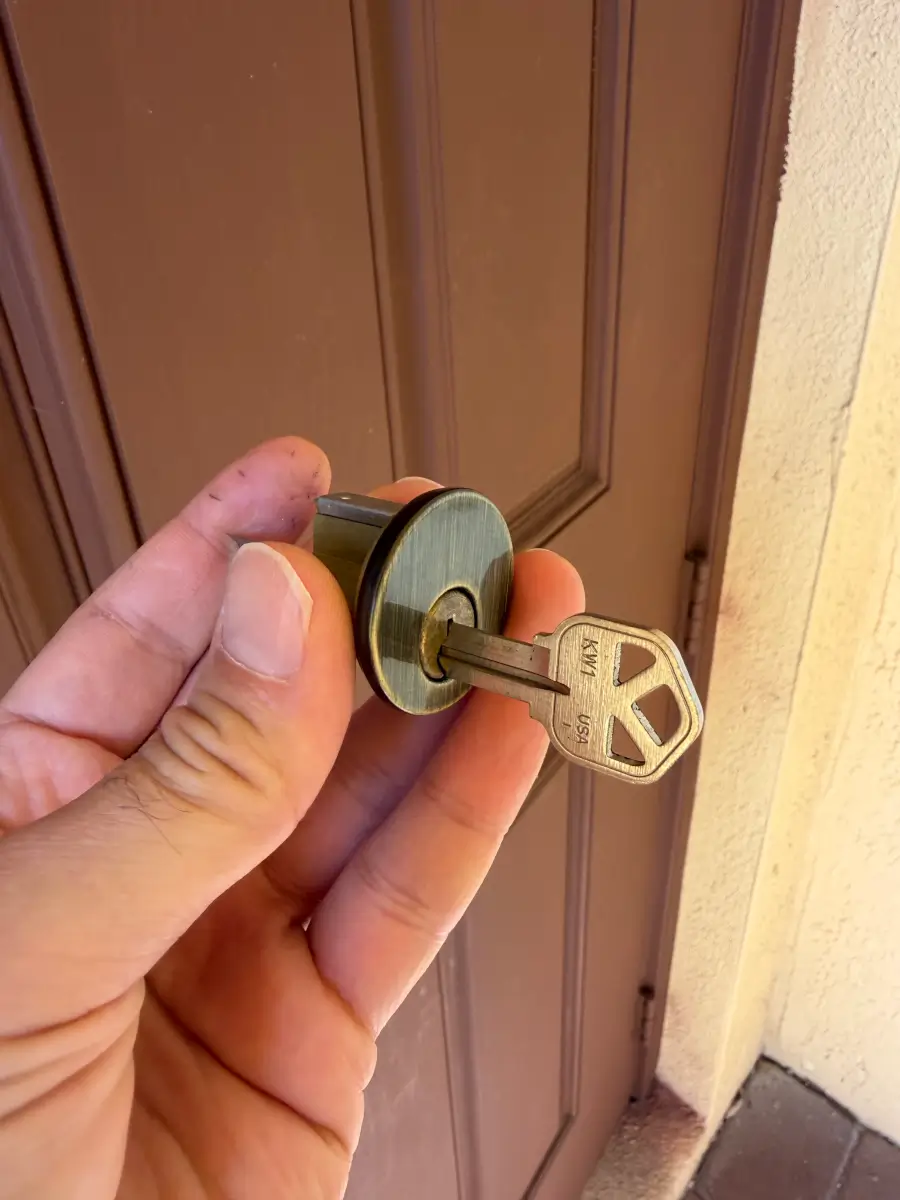
Landlord rekeying, also called re-pinning or re-coring, is the process of altering the internal pin stack inside a lock cylinder so that existing keys no longer operate the lock and a new key is cut to match the new pin configuration. The lock hardware stays in place. Only the internal pins or wafers are changed. This makes rekeying significantly cheaper and faster than full lock replacement while delivering the same outcome: complete access revocation for anyone holding the old key.
Rekeying vs. Lock Replacement: Which One You Need
If the lock cylinder and hardware are in good working order and you simply need to cut off access for a former tenant, landlord rekeying is the right call every time. If the lock is damaged, worn, a low-security grade, or part of a broader upgrade, replacement makes more sense.
Rekey vs. Replace: Quick Decision Guide
| Situation | Rekey | Replace |
|---|---|---|
| Tenant turnover, hardware in good shape | ✓ | |
| Lost or unreturned key | ✓ | |
| Standardizing multiple units to one key | ✓ | |
| Damaged or worn lock cylinder | ✓ | |
| Upgrading to higher-security grade hardware | ✓ | |
| Switching to smart or keyless entry | ✓ |
How a Locksmith Rekeys a Lock in Minutes
A trained locksmith removes the cylinder plug, swaps the driver pins and key pins for a new configuration matching the new key blank, and reassembles the cylinder. On a standard Kwikset or Schlage deadbolt, the process takes 15 to 45 minutes per door. A mobile locksmith servicing a typical West Memphis rental with a front door, back door, and side entrance completes the full property in well under two hours.
Arkansas Law Does Not Require Rekeying, But Here Is Why You Should Do It Anyway
Arkansas has no statute mandating landlord rekeying between tenants. Beyond that, Arkansas is the only state in the country with no implied warranty of habitability for most private rental housing, meaning landlords can legally rent properties as-is. The Arkansas Attorney General’s landlord-tenant guidance confirms that tenant rights largely depend on what the lease says rather than state habitability mandates. There is no rekey timeline, no required number of keys per tenant, and no state penalty for skipping landlord rekeying at turnover.
What Arkansas Law Actually Says About Locks
While Arkansas imposes no general habitability mandate, local building codes in West Memphis and Crittenden County may require functioning locks as a basic safety measure. There is also one specific statutory lock requirement worth knowing: Arkansas law requires landlords to change locks at the request of a tenant who is a victim of domestic violence or sexual assault. Failure to comply with that specific request creates genuine legal exposure.
For everything else, the legal framework around locks in Arkansas comes down to your lease and your documentation. A lease that specifies key control policies, prohibits unauthorized duplication, and ties unreturned keys to deposit deductions gives you far more protection than state statute on its own. This makes your paperwork more important than ever, because courts in a dispute will look closely at what the lease says rather than what state law implies.
Arkansas Key Control Summary for Landlords:
Tenants cannot change locks without written landlord permission. If a tenant installs a lock with permission, they must provide the landlord a key. Landlords must provide itemized security deposit accounting within 60 days of tenancy end. There is no state-mandated landlord rekeying requirement between tenants. Arkansas law requires lock changes when requested by a domestic violence or sexual assault victim. Arkansas is the only state with no implied warranty of habitability for most private rentals, making lease language your primary legal protection.
How Landlord Rekeying Protects You From Liability Claims
Here is where the legal calculus shifts in favor of rekeying even without a mandate. If a break-in or assault occurs at your rental and it is later discovered that you did not rekey after the previous tenant vacated, you face serious civil court exposure. A plaintiff’s attorney does not need a statute. They need to demonstrate that you failed to take a reasonable, low-cost security measure that would have prevented foreseeable harm. Landlord rekeying at $100 to $233 per door is almost impossible to defend against not doing.
Why Insurance Carriers View Rekeying Favorably
Documented landlord rekeying after each turnover signals to insurance carriers that you are a professionally managed, low-risk property. Some carriers ask about key control procedures during underwriting. Consistent records, including dates, locksmith invoices, and property addresses, build a paper trail that supports your position if a claim ever goes to dispute.
Arkansas requires itemized deposit accounting within 60 days of tenancy termination. If a tenant challenges a rekeying deduction, your locksmith invoice and lease language become your defense. That documentation is financial protection, not optional paperwork.
Rekeying vs. Not Rekeying: The Risk Comparison
| Risk Factor | Without Rekeying | With Rekeying |
|---|---|---|
| Former tenant access | Possible with old keys | Eliminated |
| Unauthorized key copies | Unknown number in circulation | All voided |
| Liability in break-in scenario | High civil exposure | Significantly reduced |
| Insurance claim support | Weak documentation | Strong paper trail |
| Deposit dispute defense | Difficult to justify charges | Invoice-backed deductions |
When to Rekey Your West Memphis Rental Property
Timing matters. Landlord rekeying only delivers its full value when it happens at the right moments in your property management cycle.
After Every Tenant Turnover, No Exceptions
Every single time a tenant vacates, whether the departure was friendly, contentious, early, or at lease end, the locks need to be rekeyed before the next tenant takes possession. It does not matter if the outgoing tenant returned every key they were issued. You have no way of knowing how many copies were made during the tenancy.
After a Lost or Unreturned Key Report
The moment a tenant reports a lost key or fails to return keys at move-out, treat it as a security event. Document the loss in writing, complete the landlord rekeying, and retain the locksmith invoice for a potential security deposit deduction. A lost key in West Memphis is not just an inconvenience. It is a potential access point for anyone who finds it.
After a Break-In or Attempted Entry
A break-in means someone has already targeted your property. Even if the lock itself was not compromised, rekey or replace hardware as part of your post-incident response. A rekeyed lock combined with a hardware upgrade to a Grade 1 ANSI/BHMA-rated deadbolt sends a clear signal that the property has been hardened against future attempts.
Other situations that should trigger landlord rekeying: maintenance staff or contractor turnover where property keys were issued, suspected unauthorized key duplication, and any property transfer between management companies or ownership.
Landlord Rekeying Triggers: Quick Reference
| Situation | Action Required | Priority |
|---|---|---|
| Tenant vacates (any reason) | Rekey all exterior locks before next tenant | Non-negotiable |
| Key lost or not returned at move-out | Rekey immediately, document for deposit deduction | Immediate |
| Break-in or forced entry attempt | Rekey plus consider Grade 1 deadbolt upgrade | Same day |
| Contractor or maintenance staff turnover | Rekey any locks for which keys were issued | Within 48 hours |
| Suspected unauthorized key duplication | Rekey and update key log immediately | Immediate |
| Property ownership or management transfer | Rekey entire property before new management begins | Before transfer |
| Domestic violence situation (tenant request) | Required by Arkansas law to change locks upon request | Legally required |
Key Control System Every West Memphis Landlord Needs
Landlord rekeying solves the immediate access problem. A key control system prevents the problem from accumulating in the first place. These five components work together to give you full visibility and control over who holds keys to every unit in your portfolio.
1. Keep a Key Log for Every Property
A key log records every key issued for a property, who received it, when it was issued, and when it was returned. Include the unit address, lock type, number of keys cut, key serial number if using a restricted keyway, and a signature line for each tenant. Update it at every key transaction: move-in, additional key requests, contractor issuance, and move-out return.
Without a key log, you are operating blind. You cannot accurately assess your key exposure at any given time, and you cannot support deposit deductions for unreturned keys in an Arkansas small claims or district court dispute without documentation.
2. Add Key Policy Language Directly Into Your Lease
Your lease is the most powerful key control tool you have, and most landlords underuse it. At minimum, it should specify the number of keys issued at move-in, prohibit unauthorized key duplication, require immediate reporting of lost or stolen keys, state that unreturned keys result in a rekey charge against the deposit, and confirm that tenants cannot change locks without written approval. This lease language amplifies the protection delivered by every landlord rekeying you complete and makes every key-related deduction legally defensible in Crittenden County district court.
3. Use Restricted Keyways to Stop Unauthorized Copies
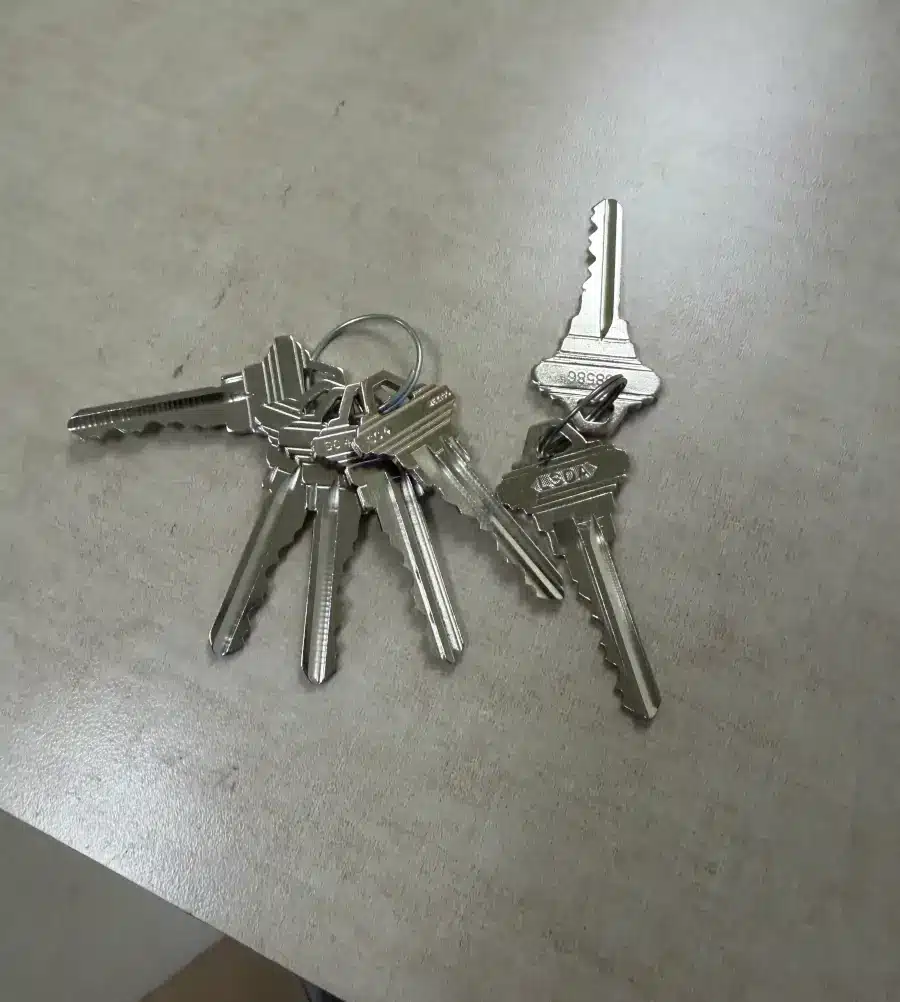
Standard Kwikset and Schlage keys can be copied at any hardware store in under two minutes. Restricted keyways use a proprietary key blank available only through authorized locksmiths. Tenants physically cannot walk into a Home Depot and duplicate the key. Brands like Medeco, Mul-T-Lock, and ASSA Abloy offer restricted keyway systems at varying price points, and the upgrade cost is modest compared to the liability exposure of uncontrolled key duplication across a rental portfolio.
4. Store Spare Keys in a Secure Lockbox
Every property should have one spare key set stored in a combination lockbox secured at a location only you control. Never leave it inside the unit, taped to a door frame, or stored in an unlocked office drawer. Change the lockbox combination every time a property’s locks are rekeyed, and document the change date in your key log.
5. Issue Temporary Keys for Contractors and Collect Them Immediately
Contractors should never hold keys longer than necessary. Establish a written checkout system: contractor signs for the key, records the date and time, completes the work, and returns the key the same day. If a key is not returned same-day, treat it as lost and schedule a rekey. For frequent vendor access, consider a dedicated contractor key that opens only specific locks rather than a master key that opens the entire portfolio.
Smart Locks vs. Traditional Rekeying for Rental Properties
For West Memphis landlords managing more than two or three units, smart locks represent a genuine operational upgrade that addresses the core problem landlord rekeying solves, but permanently, without requiring a service call at every turnover. Our smart lock installation guide covers hardware options and setup in detail for landlords considering the switch.
A quality smart lock such as the Schlage Encode Plus, Yale Assure Lock 2, or August Wi-Fi Smart Lock runs $150 to $350 per door versus a $20 to $40 hardware cost for a traditional rekey. Over a property with three exterior doors and moderate tenant turnover, the break-even point typically arrives within two to three tenant cycles. Traditional rekeying still wins on simplicity and cost for single-property landlords or low-turnover situations, but once you are managing multiple West Memphis units simultaneously, the administrative overhead of key logs, physical key storage, and per-turnover landlord rekeying costs adds up fast.
Why Keyless Entry Eliminates the Rekeying Problem Entirely
When a tenant vacates a smart lock property, you delete their access code from the app. No locksmith call, no new keys to cut, no wondering how many copies were made. The new tenant gets a new code before move-in, and the old code is permanently inactive. Most platforms support multiple simultaneous codes with individual tracking, so revoking any single user’s access takes seconds without affecting anyone else.
Audit Trails and Remote Access
Smart locks generate timestamped entry logs for every code used, providing objective documentation if a tenant disputes when maintenance visited or when a property was accessed. Remote access lets West Memphis landlords grant a contractor one-time entry, run a self-guided showing, or lock down a property after a contentious departure, all from a phone without dispatching anyone to the site.
If you install a smart lock that logs entry activity, best practice is to disclose this in the lease. Explain what data is collected, how long it is stored, and who has access to it. Transparency here prevents tenant complaints from becoming lease disputes.
Smart Lock vs. Traditional Rekeying: Side-by-Side
| Factor | Smart Lock | Traditional Rekey |
|---|---|---|
| Cost per turnover | $0 (code change) | $100 to $233 per service call |
| Time per turnover | Under 60 seconds | 15 to 45 min per door |
| Unauthorized key copies | Impossible | Copied at any hardware store |
| Audit trail | Full timestamped log | None |
| Remote access control | Yes, from any device | Requires physical presence |
| Upfront cost per door | $150 to $350 | $20 to $40 hardware cost |
| Best for | Multi-unit, high turnover | Single properties, low turnover |
Neither approach is universally superior. Many West Memphis landlords use a hybrid: smart locks on the front door and rekeyed traditional deadbolts on secondary entries.
How to Standardize Locks Across Multiple West Memphis Units
Managing five units with five different lock brands and no master key system is a logistical challenge most landlords create accidentally. Every time a lock broke, they replaced it with whatever was available at the nearest hardware store. The result is a scattered inventory that makes rental property rekeying in West Memphis slower, more expensive, and harder to coordinate across a portfolio.
When every unit uses the same lock brand and keyway family, your locksmith arrives with one set of tools and services every door without separate preparation. Standardized inventory also means you can keep spare pre-keyed cylinders on hand for immediate swap-outs during a turnover, cutting your turnaround time from a scheduled service appointment to a same-day self-install. The investment to standardize is typically made during a single rekey cycle by replacing non-standard cylinders at the same time.
Master Key Systems and Why Keyway Consistency Matters
A master key system lets one key held only by you open every unit in your portfolio while each tenant’s individual key opens only their unit. This is only possible when all locks share the same keyway family. A master key cut for a Schlage C keyway cannot operate a Kwikset KW1 keyway. Mixed brands make a master key system impossible.
- Master key systems work only within a single keyway family. Mixing brands eliminates the option entirely.
- Your master key should use a restricted keyway blank that cannot be duplicated at retail stores
- Never issue a master key to tenants, contractors, or maintenance staff under any circumstances
- Document master key holders in writing and schedule landlord rekeying at the master level if a master key is ever lost
- Some locksmiths offer grandmaster systems for landlords with multiple buildings, allowing one key for the entire portfolio
The security discipline around your master key is more important than almost any other key control decision you make. A single compromised master key negates the security of every unit in your portfolio at once.
Security Upgrades That Work Alongside Landlord Rekeying
Landlord rekeying in West Memphis AR addresses key control, but not the physical strength of your locks or the visibility of your entry points. Pair your rekeying program with these upgrades for a genuinely hardened property.
Every exterior door should have a Grade 1 ANSI/BHMA-rated deadbolt with a minimum 1-inch throw, a meaningful step up from the Grade 3 hardware pre-installed on most rental properties. Ground-floor windows need a functioning latch plus a secondary pin lock or sash lock that prevents the window from being forced open from outside. Sliding glass doors require a bar or pin system in addition to the factory latch, which provides minimal resistance to forced entry on its own. Motion-activated exterior lighting at all entry points eliminates the cover of darkness that most opportunistic break-ins rely on.
Include a move-in security packet with every new tenant: confirm the property was rekeyed before their occupancy, list the exact number of keys issued, explain the key policy from the lease in plain language, and provide your emergency contact number for lockouts. This packet signals that you are a professional landlord who takes security seriously and sets the tone for the entire tenancy from day one.
Mobile Locksmith Services Make Turnovers Faster in West Memphis
- Mobile locksmiths come to your property. No hauling hardware to a shop or waiting for a scheduled window.
- Same-day landlord rekeying between tenants keeps your vacancy period as short as possible
- A single service call covers every exterior door on a property in one visit
- Mobile services carry all necessary pins, key blanks, and cutting equipment on-site
- Most West Memphis mobile locksmiths serve Crittenden County without additional travel surcharges
Every day a unit sits vacant between leases is lost rental income. As your West Memphis locksmith team, Mobile Locksmith Services brings everything needed for a complete landlord rekeying directly to your property, handling every exterior door in a single focused visit with new keys cut and documentation in your hand before the next tenant’s move-in day.
Our technicians regularly arrive at West Memphis rental properties where landlords have not completed a landlord rekeying in two or three tenant cycles, and in nearly every case the landlord had no way to account for how many active key copies were still out there when we showed up.
A typical West Memphis mobile rekeying service call runs $100 to $233 total, covering labor, travel within Crittenden County, and two to four newly cut keys per lock. That cost is recoverable from the outgoing tenant’s security deposit if keys were not returned, or built into your standard turnover budget as a fixed operating expense.
For landlords managing five or more West Memphis units, an ongoing relationship with one mobile locksmith who maintains your key records and knows your lock inventory is worth more than shopping for the lowest per-call price. For urgent lockout situations between tenants, our 24/7 emergency locksmith line is available around the clock.
What to Ask a Locksmith Before They Start Work
Before any locksmith begins work on your rental property, confirm five things: whether the service includes a workmanship warranty on the rekey, what key blank brand and security grade will be used, whether they can service all your existing lock brands in one visit, how many keys will be cut per lock, and whether they provide a written invoice itemized by door and service type. That invoice is your paper trail for deposit deductions and insurance documentation.
How Many Keys to Request and Who Should Hold Them
The standard for a West Memphis residential rental is two keys per tenant named on the lease, plus one key held by the landlord in a secure lockbox. Issue additional keys formally, with documentation, a signature, and an entry in the key log, rather than informally. When a tenancy ends, every key on the log needs to be accounted for, and any not returned become a documented landlord rekeying charge against the security deposit.
Common Rekeying Mistakes West Memphis Landlords Make
Assuming Returned Keys Mean the Property Is Secure
This is the most widespread mistake in residential rental management. If the tenant hands you back the exact number of keys you issued, it feels like the transaction is complete. It is not. Key return confirms only that the specific copies you issued are back in your possession. It says nothing about duplicates made at any point during the tenancy.
A tenant who lived in your West Memphis rental for 24 months had ample opportunity to make copies for a partner, a parent, a friend who watered plants while they traveled, or a contractor they hired independently. Some of those copies may still be in use by people who have no idea the tenant has moved out. The only guarantee is landlord rekeying. Key return and landlord rekeying are two separate steps in your turnover checklist, not one step that substitutes for the other.
Skipping a Rekey After Short-Term Tenants
A short-term tenant has exactly the same ability to duplicate a key on day one as a long-term tenant does on month twelve. A two-week occupancy is more than enough time to make copies and distribute them. Rekey every turnover without exception. The tenure length of the outgoing tenant is irrelevant to the landlord rekeying decision.
Poor Key Records That Cause Deposit Disputes
Arkansas requires landlords to provide itemized deposit accounting within 60 days of tenancy termination. If you deduct a rekeying charge from a deposit, that deduction needs to be supported by a locksmith invoice with a date, service description, property address, and cost. Without it, a tenant who disputes the charge in Crittenden County district court has a strong case and you have no defense. A five-minute investment in organized key records at every turnover eliminates this problem entirely.
Rekeying Is the Highest-Return Security Investment for Your Rental
At $100 to $233 per service call, landlord rekeying in West Memphis AR is one of the least expensive things you will do between tenants and one of the most consequential. It eliminates every access risk created by the previous tenancy, resets your liability position, creates a defensible paper trail for deposit deductions, and signals to incoming tenants that the property is professionally managed. No other single action in your turnover process delivers that combination of security, legal protection, and tenant confidence at that price point.
Build it into your turnover budget as a fixed cost, add it to your lease as a documented policy, and schedule it as a non-negotiable step in your move-out checklist. Landlords who treat rekeying as optional are one former tenant with a grudge or one opportunistic stranger with a found key away from a property loss that costs orders of magnitude more than every rekey they ever skipped. The math is not complicated. Rekey every time.
Ready to Rekey Your West Memphis Rental?
Mobile Locksmith Services comes to your property anywhere in West Memphis and Crittenden County. Same-day turnovers, full documentation, and professional rekeying service built for landlords managing on tight timelines.
Call us now: (870) 702-9880
Frequently Asked Questions
These are the questions West Memphis landlords and tenants ask most often about rekeying, lock changes, and key control under Arkansas law.
Quick Reference: Arkansas Rekeying Rules for Landlords
| Rule | Status Under Arkansas Law |
|---|---|
| State-mandated rekeying between tenants | No requirement |
| Tenant lock changes without permission | Not permitted |
| Key provided to landlord after permitted tenant lock change | Required |
| Security deposit deduction for rekeying | Permitted with itemized documentation |
| Deposit accounting deadline | 60 days from tenancy termination |
| Landlord lock change on active tenant mid-lease | Prohibited — constitutes illegal lockout |
| Lock change for domestic violence victim (tenant request) | Required by Arkansas law |
| Implied warranty of habitability for private rentals | Not required — Arkansas is unique among all 50 states |
Understanding where Arkansas law draws these lines protects you whether you are enforcing a key policy or defending a deposit deduction in small claims court. When in doubt about a specific situation involving locks, access, or security deposits in Crittenden County, consult with a local Arkansas landlord-tenant attorney before acting.
Does Arkansas Law Require Landlords to Rekey Between Tenants?
No. Arkansas has no statute requiring landlords to rekey rental units between tenants, and unlike every other state, Arkansas does not require habitability standards for most private rentals. Civil liability exposure and insurance risk make consistent landlord rekeying the professional standard regardless of what state law requires.
Can a Tenant in West Memphis Change the Locks Without Permission?
No. Arkansas law prohibits tenants from changing or adding locks without written landlord permission. Unauthorized changes give the landlord grounds to demand hardware restoration at the tenant’s expense and may constitute a lease violation. The landlord’s right of access is not affected by any permitted lock change.
How Much Does It Cost to Rekey a Rental Property in West Memphis, AR?
Mobile locksmith rekeying in the West Memphis and Crittenden County area typically runs $100 to $233 per service call, covering travel, labor, and two to four newly cut keys per lock. The cost is fully recoverable from a departing tenant’s security deposit when keys are not returned, with proper documentation.
Can a Landlord Legally Change the Locks on a Tenant Mid-Lease?
No. Changing locks on an active tenant without a court order is considered an illegal lockout in Arkansas, exposing landlords to wrongful eviction claims. Even for nonpayment or lease violations, the proper process is a formal eviction through Crittenden County court. Self-help eviction tactics are prohibited.
How Long Does It Take a Mobile Locksmith to Rekey a Rental Property?
A single exterior door takes 15 to 45 minutes to rekey. A typical West Memphis rental with three entry points can be fully rekeyed in under two hours. Mobile locksmiths carry pin kits and key cutting equipment on-site, completing the entire landlord rekeying job in one visit with no return trips needed.


