
Key Takeaways
- A safe lockout is usually a malfunction, not a mystery. Dead keypad batteries, penalty lockouts, and drifting dial wheels cause far more locked safes than forgotten numbers do.
- When a safe won’t open, force makes everything worse. Prying and hammering can wedge the boltwork and turn a quick professional opening into a long one.
- Most safe lockout calls end without a drill ever coming out. A technician works from least destructive to most, and drilling is a planned last resort, not step one.
- Inherited and estate safes can be opened legally with the right paperwork. Proof of ownership protects you and lets the work start.
- Prices follow the lock type, not the panic. Later in this guide we break down what a safe lockout actually costs in the Hope area, and when repair beats replacement.
If your safe won’t open, the fastest fix is knowing which of four problems you have: a dead or dying keypad battery, an electronic penalty lockout, a mechanical dial that has drifted out of tolerance, or a jammed bolt. All four look identical from the outside, and none of them respond to force. A mobile technician can diagnose which one you are facing and open a locked safe at your home or business, usually without damage, and a safe lockout in the Hope area is one call away from solved, because a safe lockout is a diagnosis problem before it is a force problem: (870) 729-8850.
Why a Safe Lockout Happens More Often Than a Break-In
Here is the part nobody tells you when you buy a safe: the lock that keeps a burglar out spends its whole life practicing on you. The average safe gets opened hundreds of times a year by its owner and attacked by a criminal approximately never. So the odds always favored this moment, the one where you are standing in front of your own container, keys to nothing, entering a code that has worked for six years and getting silence.
A safe lockout builds slowly and announces itself suddenly. The keypad that needed two tries last month was telling you something. The dial that got sticky around 40 was telling you something. Locks drift, batteries fade, springs relax, and owners understandably ignore all of it until the door stays shut on the morning the title work is inside. That is the anatomy of nearly every safe lockout we answer.
The good news hiding in that bad morning: because most safe lockout situations are mechanical or electrical failures rather than lost combinations, most of them are solvable without cutting anything open. The trick is matching the fix to the failure, so let us walk through the failures.
Electronic Keypad Safes: When the Battery Is Lying to You
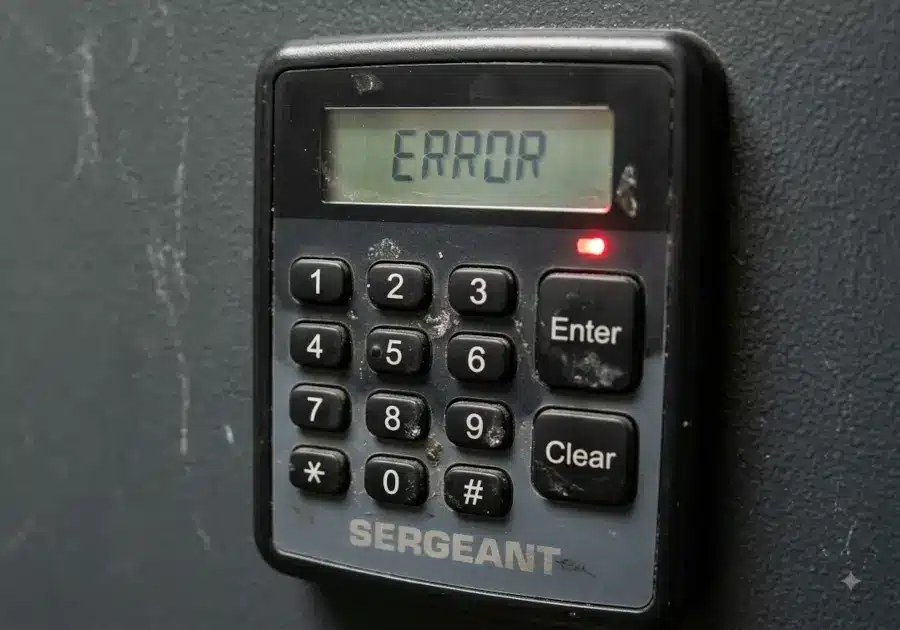
Electronic locks fail politely. They beep, they flash, they show ERROR, and an electronic safe lockout usually begins exactly this way: giving you just enough response to convince you the problem is your memory instead of their hardware. It rarely is. The most common electronic safe lockout starts with a battery that has enough power to light the display but not enough to fire the solenoid that retracts the bolt. The keypad accepts your code, chirps happily, and the handle still will not turn.
Swap in a fresh name-brand battery before anything else. Not the drawer battery that has been rolling around since 2023: a new one. On most residential models the battery sits behind the keypad face, which pops or slides off without tools. If your safe won’t open with fresh power and the correct code, you have moved past the easy fix and into real diagnosis.
The second most common culprit is the penalty lockout. Enter a wrong code a handful of times, and the lock deliberately goes dead for five to twenty minutes depending on the model. It ignores everything during that window, including the correct code, which convinces owners the lock has failed completely. If someone in the house was guessing codes before you got there, walk away, set a timer, and try once more with the code you trust.
Past those two, an electronic safe lockout gets technical: failed keypads, broken wires at the door hinge, and dead solenoids all present the same way from the outside. Those are professional territory, because the wrong move at this stage can convert a repairable lock into a drilling job. A technician can test whether the keypad is sending signal, and often replace the keypad without opening the door at all.
Dial Safes: The Combination Is Not Lost, It Is Just Out of Reach
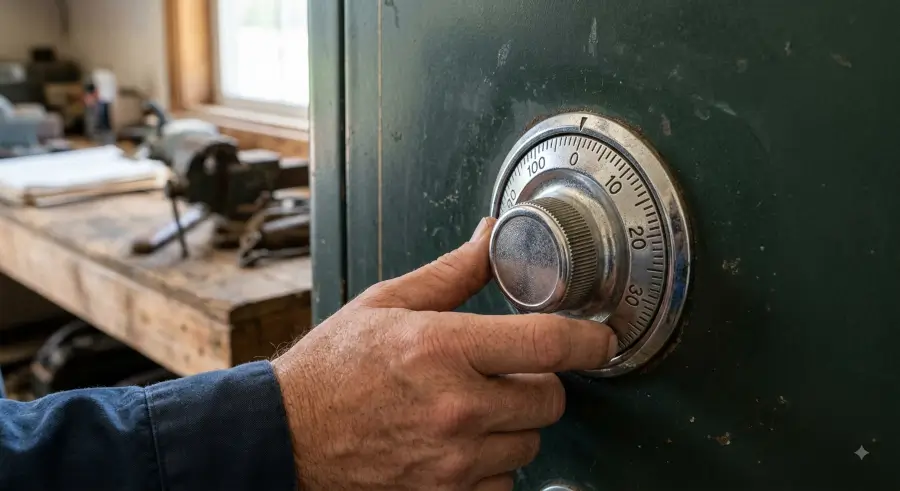
Mechanical dial locks fail honestly. No batteries, no electronics, just brass wheels that have been spinning since before smartphones existed. When a dial safe lockout happens, one of three things is usually true, and only one of them is the one everybody assumes.
First, and most often, the lock has drifted. Decades of use wear the wheels until the combination that opens the safe is no longer exactly the combination on paper. If your safe has been getting fussy, opening on the second or third try, needing a little jiggle at the last number, the numbers may now sit a digit or two off from where they started. A technician can often find the drifted combination, end the safe lockout on the spot, and then service the lock so it stops wandering.
Second, the sequence is being dialed wrong. Dial locks are unforgiving about direction, turn counts, and where you start. Four turns left to the first number, three right, two left, one right to the drop: get any leg wrong and nothing happens. If the safe changed hands and the combination came on a sticky note without the dialing procedure, the numbers can be perfectly correct and completely useless. That is the situation people describe as being locked out of my safe with the combination in my hand, and it is the easiest version of locked out of my safe to fix.
Third, the combination truly is gone. Even then the picture is better than people expect, and we will get to why in the section on how professionals open a locked safe without wrecking it.
Standing in front of a safe lockout right now?
Skip the guessing. A mobile safe technician can diagnose it over the phone and head your way with the tools to open it clean.
Bolt Jams, Handle Problems, and the Overpacked Safe
Sometimes the lock is fine and the door is the problem. Boltwork jams are the sleeper cause of safe lockout calls, and they have a signature: the code works, the lock clearly releases, and the handle either will not move or spins without doing anything.
The most common cause is almost embarrassing: the safe is overpacked, and something inside is pressing against the door or the bolt track. A rifle case shifted, a document box slumped, and now the bolts cannot travel. Sometimes pressing the door inward firmly while turning the handle relieves the pressure and the bolts retract. That thirty-second test resolves a surprising share of safe lockout calls before we ever start the truck.
The rest of the jam family is mechanical: a broken handle spindle, a relocker that tripped when the safe was moved or bumped, or bolt springs that finally quit. A tripped relocker in particular is not a do-it-yourself situation, because it exists specifically to resist tampering. When a safe won’t open even though the lock releases, stop working the handle. Every forced cycle can wedge the boltwork tighter and narrow the technician’s options.
The Inherited Safe Problem
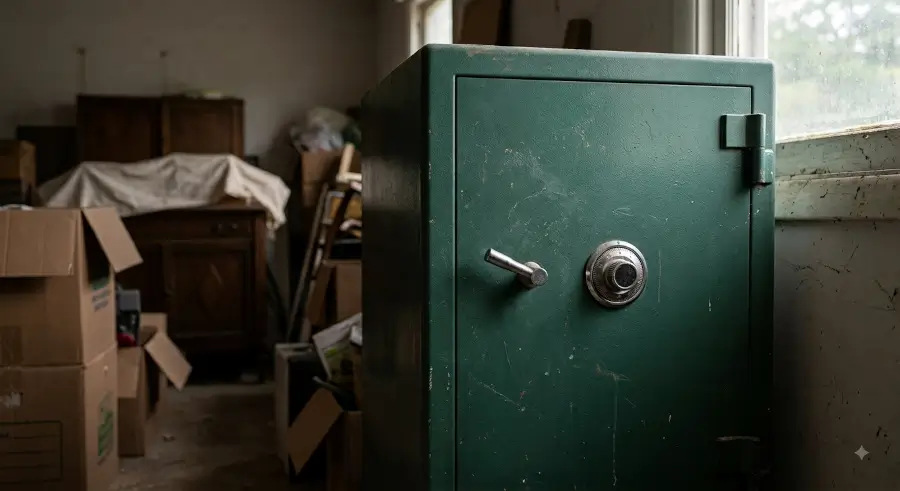
Every estate in Arkansas seems to include one: a heavy old safe in a shop corner or back bedroom, combination known only to someone who is gone. It is the slowest moving safe lockout there is, measured in years instead of minutes. Families wait years to deal with them, half because of the cost question and half because nobody is sure whether a locksmith will even touch a safe the caller cannot open with a code of their own.
We will, and so will any reputable shop, with one requirement: proof you have the right to open it. Documentation protects everyone. Something connecting you to the safe or the property it sits on, a death certificate or estate paperwork in probate situations, and a photo ID. It is a five minute formality for an honest owner and a wall for anyone else, which is exactly the point.
What is inside is usually not treasure, and honestly that is fine. Titles, deeds, war medals, a pistol nobody knew about, savings bonds from 1987: the value of opening an inherited safe is mostly the value of finally knowing. Once it is open, a technician can set a fresh combination and put the container back into service, and an older American-made safe is often better built than anything you would buy to replace it. Being locked out of my safe is a temporary condition. A quality safe is a permanent asset.
What Not to Try (From People Who Open the Aftermath)
Search results for a safe lockout are full of confident advice, and a technician can usually tell which video someone watched by the damage pattern a failed safe lockout rescue leaves on the door. In rough order of how expensive they make things:
Prying. A crowbar against a safe door mostly bends the door frame and wedges the bolts under load. Safes are designed to resist exactly this, so the pry bar loses, but not before it converts a clean opening into a fight.
Drilling blind. Drilling works when you know precisely where to drill for that make and model, at the correct angle, through hardplate that eats normal bits. Drilling without that knowledge punches holes in the wrong places, can trip the relocker, and can permanently glass a lock that was ten minutes from opening properly.
The bounce and the drop. Hitting the top of the safe while working the handle, or tipping the safe forward, occasionally pops the cheapest hotel-style boxes. On a real safe it accomplishes nothing except tripping the relocker, and now the polite options are gone.
Guessing codes for an hour. On electronic locks this stacks penalty lockout on penalty lockout, and some models escalate the timeout each round. You can spend an evening locked out by your own persistence.
The pattern behind all of it: a safe is built to interpret force as an attack and respond by locking harder. Patience is not just cheaper. Patience is the strategy.
Most
safe openings finish with no drilling at all
1 visit
covers diagnosis, opening, and a new combination
$0
surprise fees, because the quote comes before the truck
How a Professional Opens a Locked Safe Without Wrecking It
The professional playbook runs from least destructive to most, and the order is the whole craft. Organizations like the Safe and Vault Technicians Association exist because this work is its own discipline inside the locksmith trade, with its own training and its own toolbox.
Step one of any professional safe lockout response is diagnosis, and it starts before the truck moves. What brand, what lock type, what exactly happens when you try it: those answers separate a battery problem from a bolt problem in two minutes. Step two is the non-invasive work. On electronic locks that means testing the keypad, checking the wiring at the hinge, and replacing failed exterior components. On dial locks it means finding a drifted combination or, when the numbers are truly gone, manipulation: opening the lock by feel and feedback, no marks, no holes.
Only when those roads close does drilling enter the safe lockout playbook, and professional drilling looks nothing like the movies. It means one small hole in a precise location for that model, a scope to see the wheels or release the lock, and then a repair that plugs the hole and returns the safe to service with a fresh combination. Done right, you keep the safe, the contents, and the security. That is the difference between someone who can open a locked safe and someone who can merely get a safe open.
It is also why the answer to “can you open a locked safe without ruining it” is almost always yes. The exceptions are usually safes that were attacked first, which is one more argument for making the phone call before the crowbar comes off the wall.
Commercial Safes: When the Deposit Cannot Wait
A safe lockout at a business has a clock on it that a home safe never does. The drop safe holds the weekend deposit, the pharmacy container holds tomorrow’s schedule, and the register drawers only work if the change fund comes out at open. Commercial safe lockout calls get treated with that urgency, because a locked cash safe is not an inconvenience, it is a stalled business.
Business containers also fail in their own ways. Time delay locks confuse new managers who did not know about the wait. Turnover leaves codes behind in the heads of people who no longer work there, which is both a safe lockout waiting to happen and a security hole worth closing today. Drop safes jam from overstuffed deposit slots. And when a manager quits on bad terms, the smart move is not waiting for a problem: recode the lock the same week, the same way you would rekey the doors.
The service pattern that works for shops around here is simple: open a locked safe fast when the emergency hits, then set up codes and documentation so the next staffing change is a two minute recode instead of another emergency. One visit fixes today. The paperwork fixes next year.
What a Safe Lockout Costs in the Hope Area
Numbers first, because that is why you scrolled. In our region, straightforward safe lockout openings on common residential safes generally land between $150 and $300. Jobs that require drilling and repair on higher security containers typically run $300 to $600. A combination change or keypad replacement on an already-open safe usually falls between $80 and $150. Every job gets a firm quote by phone before dispatch, and the number you approve is the number you pay.
What moves the price is the container, not the crisis. A light-duty bedroom safe and a fire-rated gun safe with a tripped relocker are different jobs, and honest pricing reflects that instead of hiding it. Be cautious of anyone quoting one flat price for every safe lockout sight unseen, and equally cautious of a mystery low number that grows once the technician arrives. Both patterns end the same way for the customer.
One more cost worth naming: the do-nothing cost. A safe that will not open is a safe that is not protecting anything new, and the documents you route around it end up in drawers. Solving the safe lockout once costs less than most people have already lost in time spent worrying at the dial.
Repair, Replace, or Retire the Safe?
After the door swings, decide what happens next while the technician is still standing there. If the lock failed from age, replacing the lock body or keypad is routine and cheaper than a new safe. If the container is quality steel with a worn lock, new lock on old safe is the best money in this whole story. If the safe is a thin big-box unit whose safe lockout happened because it was built to a price, take the moment to upgrade, because you now know exactly what its lock does under pressure.
Either way, leave with the combination changed, the dialing procedure written down, and the combination stored somewhere that is not inside the safe. You would be surprised. Or, given how you spent your morning, maybe you would not.
Keeping This From Happening Twice
The cheapest safe lockout is the one that never happens, and prevention here is genuinely easy. On electronic locks, change the battery on a schedule instead of waiting for the warning: once a year, same weekend you do the smoke detectors, with a quality battery. If the lock ever needs two tries to fire the bolt, treat that as the failure announcement it is and deal with it while the door still opens.
On dial locks, service is the whole game. A dial lock that gets professionally cleaned and adjusted every few years will run for generations, while a neglected one drifts until one morning the safe won’t open on the numbers it accepted all decade. If your dial already needs a jiggle, coaxing, or a lucky third try, that lock is drifting right now and telling you so.
And for every safe: write the full dialing procedure down, not just the numbers. Store the combination somewhere that is not inside the safe. Do not pack contents against the door. Test the lock with the door open after any battery change or recode. Five habits, thirty seconds each, and the odds of a repeat safe lockout drop close to zero.
Safe Work Around Hope and Hempstead County
Hope sits at the kind of crossroads where safes accumulate: farm families with decades of paperwork, deer camps with gun safes that see three months of use a year, and I-30 corridor businesses with cash containers that cycle daily. A safe locksmith Hope can actually reach matters more here than in a metro, because the alternative most people are offered is hauling seven hundred pounds of steel to a shop two hours away. Our model is the opposite: the technician, the tools, and the parts come to your address anywhere around Hope and the surrounding county.
The same trucks handle the rest of the lock world too, from home locksmith services and commercial door hardware to every emergency lockout in between, with the full service list on one page if you want the map of what we do. A safe lockout is a specialty call, but it is answered by the same operation: firm quote first, real arrival window, work done at your address. That is what a safe locksmith Hope families recommend looks like in practice, and it is the standard every safe lockout call gets from us.
Ready to Get That Safe Open Today?
Mobile Locksmith Services opens, repairs, and recodes safes at your home or business across the Hope area. Tell us what the safe is doing, get a firm safe lockout quote on the phone, and a safe locksmith Hope trusts will be on the way.
Safe Lockout Questions We Hear Around Hope
These come straight from real calls in Hempstead County. If your situation is different, dial (870) 729-8850 and describe what the safe is doing, and you will get a straight answer from a person.
How much does it cost to open a locked safe in Hope AR?
Most safe openings in our region run $150 to $300, with drill-and-repair jobs on high security containers reaching $300 to $600. The exact number depends on the safe and lock type, so we quote a firm price by phone before dispatch, and that approved figure is what you pay when the door opens.
Can a locksmith open my safe without drilling it?
Usually, yes. Most safe lockouts trace to dead batteries, penalty lockouts, drifted dial combinations, or bolt jams, and all of those are solved without drilling. When drilling is truly required, a professional makes one small, precisely placed hole and repairs it, returning the safe to full service.
The keypad beeps but my safe will not open. What is wrong?
A battery too weak to fire the bolt solenoid is the most likely cause, so start with a brand new battery, not a spare drawer battery. If fresh power and the correct code still fail, suspect a penalty lockout, a failed keypad, or broken hinge wiring, which a technician can test and fix on site.
I inherited a safe with no combination. Can it be opened?
Yes. Bring proof of ownership, such as estate paperwork or documents tying you to the property, plus photo ID, and a technician can open it legally at your location. Afterward the lock gets a fresh combination so the safe goes back into service instead of sitting locked in a corner for another decade.
Can you get into a gun safe if the combination is lost?
Yes, lost combinations on gun safes are routine work. A technician can often recover a drifted dial combination or open the lock by manipulation, and electronic models are diagnosed at the keypad first. Ownership verification is required on every safe job, which protects you as much as it protects us.
Will opening the safe damage whatever is inside?
No, professional methods protect the contents. Non-destructive openings never touch the interior, and even a drilled opening uses one small hole placed to reach the lock, nowhere near stored items. Contents are at far greater risk from prying and hammering than from a proper professional opening.
Can you change my safe combination after you open it?
Yes, and you should. A combination change or keypad recode is quick once the door is open, and it is included in how we finish most safe openings. You leave with a working safe, a combination nobody else holds, and the dialing procedure written down so the next opening takes seconds, not a service call.


